Charging at home is the whole point of owning an electric car, and installing an electric car charger at home is simpler than most people expect. You plug in when you get back, and you leave in the morning with a full battery. Getting there takes one afternoon of work by an electrician who understands EV loads, plus a bit of planning before that. This is what a home EV charger installation in Abuja actually involves, start to finish.
Step 1: Work out what your supply can give you
Everything starts at the distribution board. An installer should look at your incoming supply, your main breaker rating, how full the board is, and what else in the house runs in the evening: air conditioning, water heater, pumps, inverter charging. An EV charger draws a heavy load continuously for hours, which is very different from a kettle or an iron.
The answer to this question decides your charger size. There is no point installing a 22kW unit on a supply that cannot sustain it; you will simply trip the main breaker every night and blame the charger.
Step 2: Choose the charger
- 7.4kW single-phase Type 2: the standard home wallbox, sometimes sold as a 7kW home charger or an EV wall charger. Adds roughly a full battery overnight for most cars. Suits the majority of Abuja homes.
- 11kW or 22kW three-phase Type 2: a 22kW home charger is faster, but only useful if you have a genuine three-phase supply and a car whose onboard charger can accept it.
- Smart vs simple: a smart charger lets you schedule charging, cap the current, and see your usage. Worth it if you share a supply or want to charge from solar.
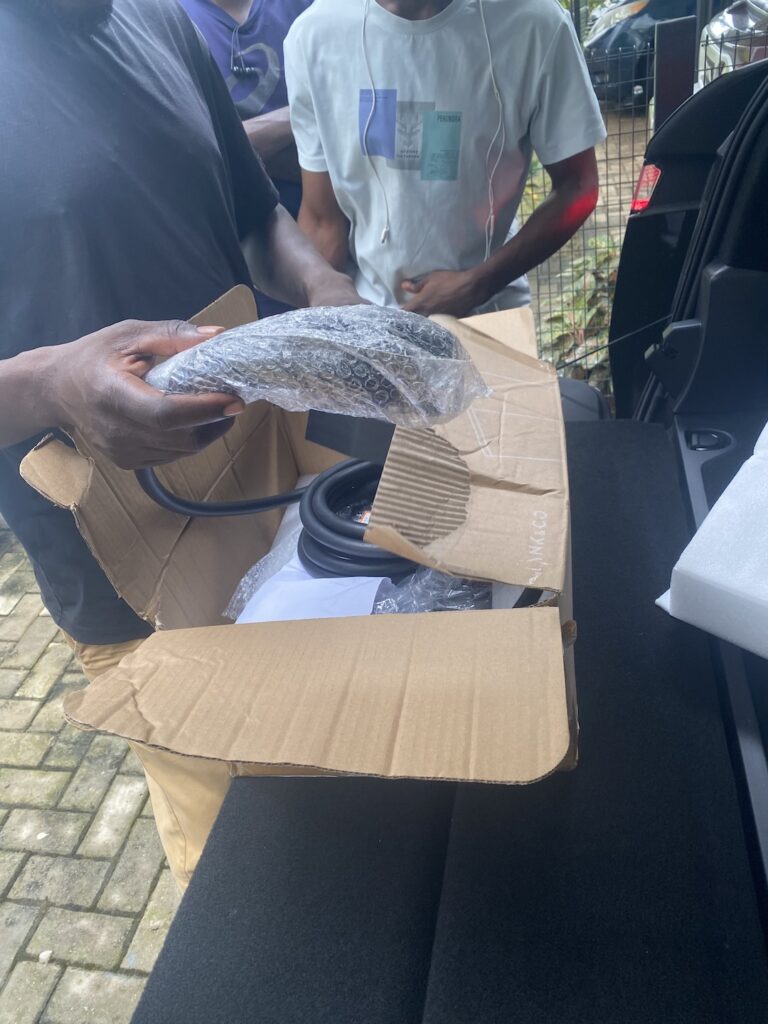
Almost every EV sold new today uses a Type 2 socket for AC charging. Some imported models use other standards, so tell your installer the exact model before anything is ordered. Our guide to EV charge point connectors covers Type 2, CCS2, CHAdeMO and GB/T.
Step 3: Pick the position
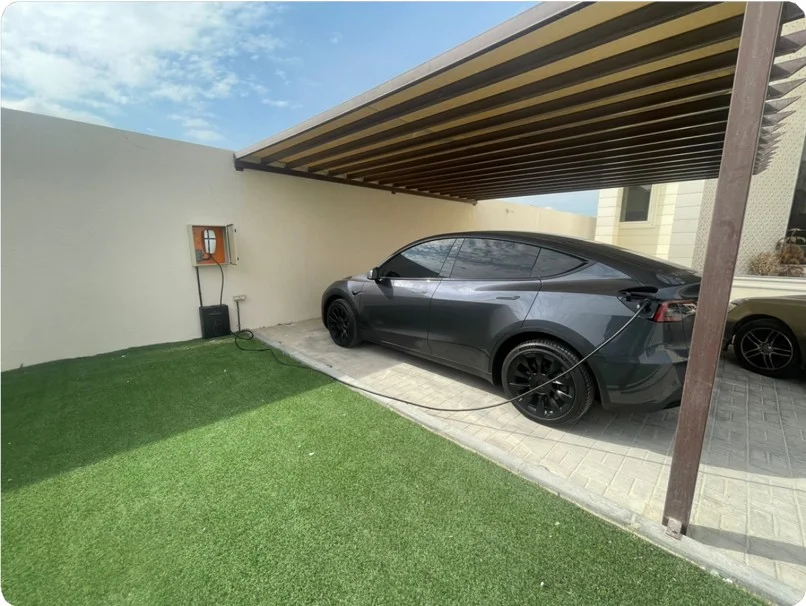
The charger should sit where the cable reaches your charging port comfortably without stretching across a walkway. Think about how you actually park (nose in or reverse in) and where the port is on your car. Wall mounting is neatest; a pedestal works where there is no suitable wall, such as an open carport or a driveway bay.
Shorter cable runs are cheaper, but do not put the unit somewhere awkward just to save a few metres of cable. You will live with the position for years.
Step 4: The installation itself
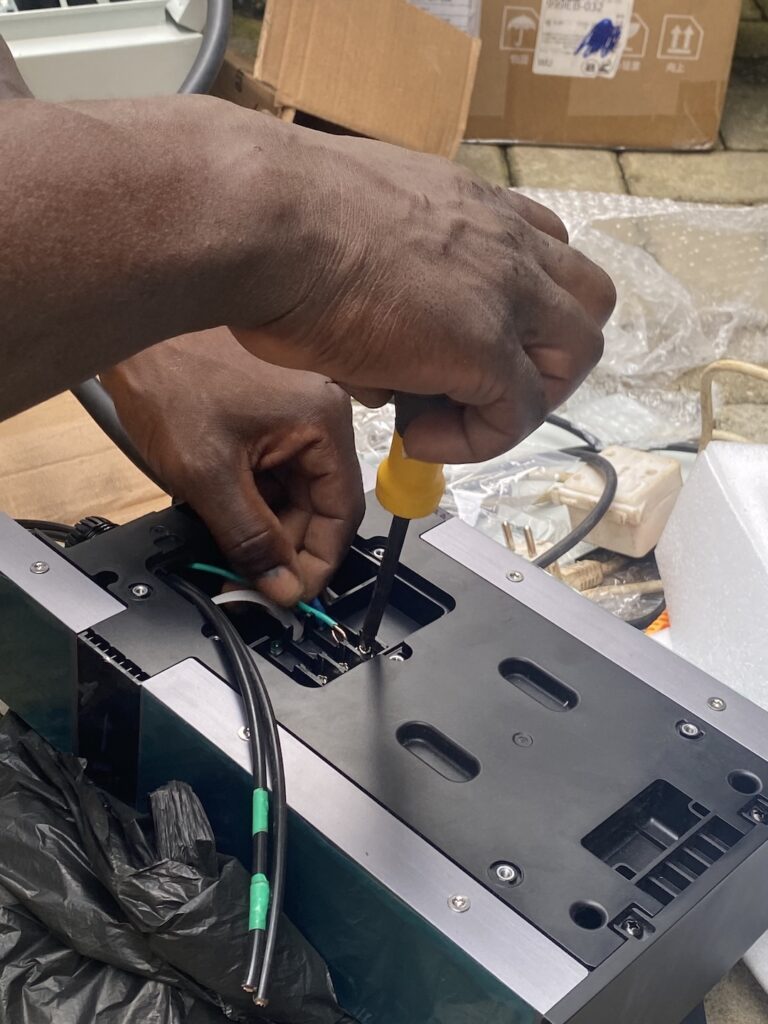
A proper installation means a dedicated circuit from the board to the charger, not a spur off the sockets. That circuit gets its own correctly rated protective device and the right earthing arrangement. Cable is run in armoured or protected form, clipped or ducted neatly, and terminated properly at both ends. Most single-charger home jobs are done within a day. For more on residential charge point installation in the FCT, see EV Charger Abuja.
Step 5: Testing and handover
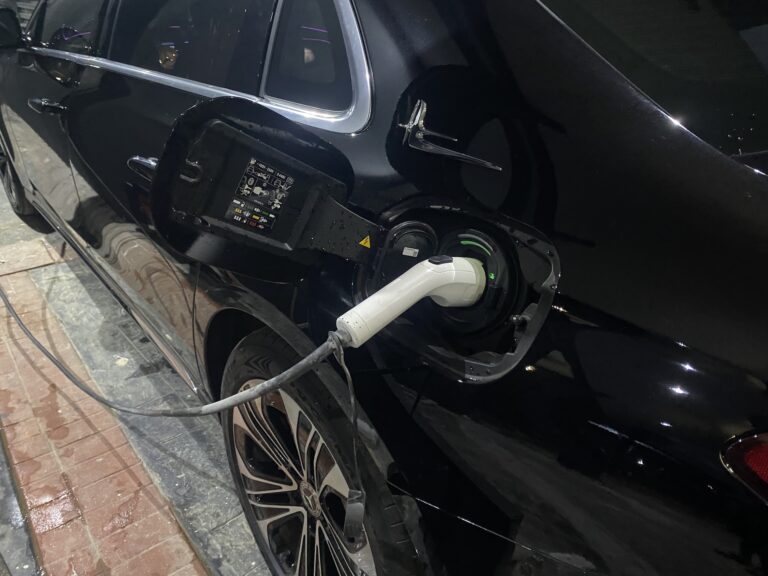
Before we leave a site, we energise the unit and actually charge the car with it. You should see the charger start, deliver current, and stop cleanly. You should also be shown how to start and stop a session, what the indicator lights mean, and what to do if it faults.
Common mistakes we get called out to fix
- A charger fed from an existing socket circuit, which trips or overheats under sustained load.
- No load assessment, so the charger competes with the air conditioning every evening.
- Undersized cable over a long run, causing voltage drop and slow charging.
- A unit mounted in full weather with no consideration for rain or dust ingress.
- No earthing arrangement suited to an outdoor charge point.
If any of that sounds like your current setup, it is worth having it inspected. We service and correct chargers whether or not we installed them. See our EV charging services.
What it costs
The hardware is only part of the price. Cable run length, supply upgrades and mounting all move the total, which is why we survey before quoting. We break the drivers down in detail in what determines the cost of EV charger installation in Abuja.
Ready to charge at home? Call (+234) 706 727 6002, message us on WhatsApp, or book a free site assessment.